Thursday, December 3, 2015

HP Launches 75-PPM A3 MFP and More

New offerings make digital capture more accessible; new scanners and MFPs deliver speed, efficiency
PALO ALTO, Calif., December 3, 2015 — HP Inc. today announced new solutions designed to make it easier and less expensive for customers to deploy digital capture, as well as new scanners and MFPs that provide faster scanning and printing.

“Converting paper into digital files helps businesses lower costs and operate more efficiently,” said Edmund Wingate, vice president & general manager, JetAdvantage Solutions, HP. “HP is working to eliminate the barriers of cost and complexity so more customers can deploy and benefit from digital capture.”
New JetAdvantage Solutions
HP has updated its JetAdvantage solution portfolio with new offerings that make it simpler and less expensive to deploy scanner and MFP-based digital capture. Rather than invest in a complex, extensively featured solution, the new HP offerings enable customers to deploy faster with less upfront investment. The new HP JetAdvantage solution offerings include:

-HP Scan Configuration Service provides template-based scan flows for use with HP Embedded Capture. HP has also introduced templates for healthcare and financial services, with additional industry templates to follow. These templates enable set up of repeatable digital capture processes that support common business functions for these industries. For healthcare, the supported processes are patient admission and patient discharge. The financial services template supports processes for loan application and account opening. The HP Scan Configuration Service leverages predefined templates to help reduce deployment time significantly for implementing scan flows and lower the cost for deploying custom scan flows, with pricing set at a one-time fee of $25 per device when bundled with the purchase and installation of HP Embedded Capture.

-HP Capture and Route is now available through a one button implementation on HP Enterprise MFPs and Digital Senders. For customers that only need to deploy a single process to digitally capture and manage paper documents, this option enables a simple, modular deployment, along with pricing flexibility. Businesses get the flexibility to start small, implementing a single process and add additional processes over time as needed.

New Scanners Enable Faster Digitalization
HP is further helping customers boost office productivity by making the process of scanning and converting paper documents more efficient with three new HP ScanJet devices that deliver faster scanning speeds.
  • For small and medium businesses with general office scanning needs, the HP ScanJet Pro 2500f1 and the HP ScanJet Pro 3500f1 PC-connected flatbed scanners with automatic document feeders provide single pass duplex scanning and scan to cloud capabilities. The HP ScanJet Pro 2500fn1 can scan up to 40 images per minute and the HP ScanJet Pro 3500fn1 can scan up to 50 images per minute.1
  • For small and medium businesses and enterprise departments in need of a scanner with network connectivity, HP is announcing the HP ScanJet Pro 4500fn1, a flatbed scanner with an ADF that includes on-device sending and scanning, Wi-Fi and Wi-Fi direct connectivity, and single pass duplex scanning of up to 60 images per minute. This scanner is available beginning Jan. 7.2
  • To help further enhance productivity for converting paper documents into digital files, HP will deliver the HP JetAdvantage Capture app, which makes it easy to capture, store and route digital files from a mobile device. The app also supports using mobile devices to initiate scanning and receive scanned documents from Wi-Fi-enabled HP MFPs and scanners, such as the HP ScanJet Pro 4500fn1. This app is available beginning Jan. 7.  New MFPs deliver high volumes and fast speeds
    HP is expanding its A3 portfolio, introducing two new MFPs for managed print services customers in need of high-volume imaging and printing. The HP MFP S965dn and HP MFP S975dn are designed to support high volume document workflows and light production printing while saving up to 30 percent on printing costs.3 The HP MFP S965dn prints up to 65 pages a minute and the HP MFP S975dn prints up to 75 pages a minute, and both devices can scan up to 200 images per minute with single pass dual sided scanning.
    More information about the new HP JetAdvantage solution portfolio is available www.hp.com/go/jetadvantage.
    About HP Inc.
    HP Inc. creates technology that makes life better for everyone, everywhere. Through our portfolio of printers, PCs, mobile devices, solutions, and services, we engineer experiences that amaze. More information about HP Inc. is available at http://www.hp.com.
    1Scan speeds of up to 40 images per minute for the HP ScanJet 2500f1 and 50 images per minute for the HP ScanJet 3500f1 measured at 300 dpi (black-and-white, grayscale, and color). Actual processing speeds may vary depending on scan resolution, network conditions, computer performance, and application software.
    2Scan speeds of up to 60 images per minute for the HP ScanJet 4500fn1 measured at 300 dpi (black-and-white, grayscale, and color). Actual processing speeds may vary depending on scan resolution, network conditions, computer performance, and application software.
    3Estimated energy and paper savings based on analysis of select HP Managed Print Services customers’ imaging and printing operations using data gathered on devices and paper consumption, comparing with post-MPS actuals or projections. Results depend on unique business environments, the way HP products and services are used, and other factors. Overall printing costs are unique to each company and should not be relied on for savings you may achieve. According to industry analysts, savings of up to 30% are typical with managed print services.
    4Printing speed measured using ISO/IEC 24734 and excludes first set of test documents. For more information, see hp.com/go/printerclaims. Exact speed varies depending on the system configuration, software application, driver, and document complexity.
    5Scan speeds measured from ADF. Actual processing speeds may vary depending on scan resolution, network conditions, computer performance, and application software.
    This document contains forward-looking statements within the meaning of the safe harbor provisions of the Private Securities Litigation Reform Act of 1995. Such statements involve risks, uncertainties and assumptions. If such risks or uncertainties materialize or such assumptions prove incorrect, the results of HP and its consolidated subsidiaries could differ materially from those expressed or implied by such forward-looking statements and assumptions. All statements other than statements of historical fact are statements that could be deemed forward-looking statements, including the expected benefits and costs of the transaction; the expected timing of the completion of the transaction; the ability to complete the transaction considering the various closing conditions, including those conditions related to regulatory approvals and Unisplendour shareholder vote; any statements of expectation or belief; and any statements of assumptions underlying any of the foregoing. Risks, uncertainties and assumptions include the possibility that expected benefits may not materialize as expected; that the transaction may not be timely completed, if at all; that, prior to the completion of the transaction, the new H3C business may not perform as expected due to transaction-related uncertainty or other factors; that the parties are unable to successfully implement integration strategies; and other risks that are described in HP’s Securities and Exchange Commission reports, including but not limited to the risks described in HP’s Annual Report on Form 10-K for its fiscal year ended October 31, 2014 and HP’s Quarterly Report on Form 10-Q for its fiscal quarter ended January 31, 2015. HP assumes no obligation and does not intend to update these forward-looking statements.
    © 2015 Hewlett-Packard Development Company, L.P. The information contained herein is subject to change without notice. The only warranties for HP products and services are set forth in the express warranty statements accompanying such products and services. Nothing herein should be construed as constituting an additional warranty. HP shall not be liable for technical or editorial errors or omissions contained herein.

Xeikon – the new digital printing solutions division of Flint https://shar.es/1c8KDn

Xeikon – the new digital printing solutions division of Flint

Ralf Schlozer
Nov 24, 2015 On Friday the 20th of November the news broke that the Flint Group has bought Xeikon from previous venture capital owner Bencis, almost two and half years after they bought the digital print and platesetter business from Punch International.
Xeikon will continue to operate in its existing lines of business and will now become a new division known as Flint Group Digital Printing Solutions. Even in terms of personnel, continuity is sought, with Xeikon CEO Wim Maes staying as president of the division. The deal needs the approval of European competition authorities, which is expected by end of 2015 as there should not be any concerns about the transaction.
In some ways the acquisition marks a U-turn for Flint after it sold its nascent Jetrion inkjet division to EFI in 2006. EFI paid around $40 million as its first investment in inkjet printing, in the process starting a new line of business, while digital activities pretty much stopped at Flint. Now Flint Group feels it is ready to throw their hat again into the digital arena, possibly seeing the success the Jetrion business is having today. A bigger driver is likely the changed ownership that Flint Group itself is now experiencing. Since 2014 Flint has been essentially an equity capital owned business, owned by Goldman Sachs Merchant Banking Division in partnership with Koch Equity Development. Prior to that, Flint had grown by acquisition and merger into a leading position in litho and packaging inks. To this day, Flint continues to acquire other ink businesses to consolidate its position.
The Xeikon activities are a good complement to the activities of Flint. Flint is focussing on printing ink for analogue presses, including blankets and press chemicals, as well as flexo plates. So far , Flint Group has had two divisions: one for packaging and one named “print media” – essentially focussing on heatset offset web applications. There is a small overlap in the flexo business however: Xeikon produces Thermoflexx platesetters for exposing flexo plates, including those from Flint.
The core appeal of Xeikon, however, is its digital press business, on which Xeikon was founded in the late 1980s and which brought out its first digital color press in 1993, the same year in which Indigo launched its own color press. Today Xeikon builds webfed dry toner presses both for document printing and packaging print. While shares in document printing are low because of stiff competition from a range of vendors, Xeikon’s label and packaging press business has grown quickly in recent years; today it accounts for over 50% of Xeikon’s revenues and has made it the second largest supplier in the market after HP Indigo .
In the short term there will be no changes to the Xeikon operations, and even for drupa Flint Group and Xeikon will focus on their lines of business in separate booths. In the mid and long term Xeikon can certainly benefit from Flint’s greater financial resources and the global distribution network. While Flint Group is only selling direct in a couple of major countries, Xeikon’s new parent has many offices and sales and support locations around the world. While it will take time to scale up knowledge about Xeikon among the wider Flint Group operations, Xeikon and the new Flint digital division can expect to ultimately benefit from being a part of a much larger company.
In the long term the financial resources and Flint’s aim to establish itself in digital print will be of great benefit to Xeikon as well. At drupa 2012 Xeikon had a technology demo for liquid toner printing and announced it was working on a press under the Trillium name. While the company has gone quiet in the meantime and the initially announced shipment to a French customer, that has not happened yet; however, there are now three Trillium printing lines in operation at Xeikon’s Lier facility, partially producing commercial work.; and the full launch will be at drupa 2016. We frequently see that new product introductions are delayed and ironing out the last wrinkles is the most difficult and time consuming part in launching a new product. Increasing the resources in the final stretch of product launch certainly would help.
Flint will certainly want to grow the digital side of their business, as opposed to a financial investor mainly concerned about a return of operations. As Antoine Fady, CEO of Flint, says: “This acquisition represents an excellent opportunity for Flint Group, propelling the organisation further into the digital solutions market, where we will continue to deliver on our long term strategy of driving growth through product innovation, focus on developing markets and portfolio expansion.” In contrast to analogue printing, in digital printing hardware and consumables are closely linked, especially for toner devices. The acquisition is opening the door for Flint now to grow in both areas. Additionally, digital print remains on a growth path and digital packaging print even more so. The labels market is moving rapidly towards digital production and flexible and folding carton are just starting to take off. It is entirely possible that more acquisitions will follow to strengthen Flint’s position in digital print.
- See more at: http://blog.infotrends.com/?p=20434#more-20434

Xeikon – the new digital printing solutions division of Flint

Ralf Schlozer
Nov 24, 2015 On Friday the 20th of November the news broke that the Flint Group has bought Xeikon from previous venture capital owner Bencis, almost two and half years after they bought the digital print and platesetter business from Punch International.
Xeikon will continue to operate in its existing lines of business and will now become a new division known as Flint Group Digital Printing Solutions. Even in terms of personnel, continuity is sought, with Xeikon CEO Wim Maes staying as president of the division. The deal needs the approval of European competition authorities, which is expected by end of 2015 as there should not be any concerns about the transaction.
In some ways the acquisition marks a U-turn for Flint after it sold its nascent Jetrion inkjet division to EFI in 2006. EFI paid around $40 million as its first investment in inkjet printing, in the process starting a new line of business, while digital activities pretty much stopped at Flint. Now Flint Group feels it is ready to throw their hat again into the digital arena, possibly seeing the success the Jetrion business is having today. A bigger driver is likely the changed ownership that Flint Group itself is now experiencing. Since 2014 Flint has been essentially an equity capital owned business, owned by Goldman Sachs Merchant Banking Division in partnership with Koch Equity Development. Prior to that, Flint had grown by acquisition and merger into a leading position in litho and packaging inks. To this day, Flint continues to acquire other ink businesses to consolidate its position.
The Xeikon activities are a good complement to the activities of Flint. Flint is focussing on printing ink for analogue presses, including blankets and press chemicals, as well as flexo plates. So far , Flint Group has had two divisions: one for packaging and one named “print media” – essentially focussing on heatset offset web applications. There is a small overlap in the flexo business however: Xeikon produces Thermoflexx platesetters for exposing flexo plates, including those from Flint.
The core appeal of Xeikon, however, is its digital press business, on which Xeikon was founded in the late 1980s and which brought out its first digital color press in 1993, the same year in which Indigo launched its own color press. Today Xeikon builds webfed dry toner presses both for document printing and packaging print. While shares in document printing are low because of stiff competition from a range of vendors, Xeikon’s label and packaging press business has grown quickly in recent years; today it accounts for over 50% of Xeikon’s revenues and has made it the second largest supplier in the market after HP Indigo .
In the short term there will be no changes to the Xeikon operations, and even for drupa Flint Group and Xeikon will focus on their lines of business in separate booths. In the mid and long term Xeikon can certainly benefit from Flint’s greater financial resources and the global distribution network. While Flint Group is only selling direct in a couple of major countries, Xeikon’s new parent has many offices and sales and support locations around the world. While it will take time to scale up knowledge about Xeikon among the wider Flint Group operations, Xeikon and the new Flint digital division can expect to ultimately benefit from being a part of a much larger company.
In the long term the financial resources and Flint’s aim to establish itself in digital print will be of great benefit to Xeikon as well. At drupa 2012 Xeikon had a technology demo for liquid toner printing and announced it was working on a press under the Trillium name. While the company has gone quiet in the meantime and the initially announced shipment to a French customer, that has not happened yet; however, there are now three Trillium printing lines in operation at Xeikon’s Lier facility, partially producing commercial work.; and the full launch will be at drupa 2016. We frequently see that new product introductions are delayed and ironing out the last wrinkles is the most difficult and time consuming part in launching a new product. Increasing the resources in the final stretch of product launch certainly would help.
Flint will certainly want to grow the digital side of their business, as opposed to a financial investor mainly concerned about a return of operations. As Antoine Fady, CEO of Flint, says: “This acquisition represents an excellent opportunity for Flint Group, propelling the organisation further into the digital solutions market, where we will continue to deliver on our long term strategy of driving growth through product innovation, focus on developing markets and portfolio expansion.” In contrast to analogue printing, in digital printing hardware and consumables are closely linked, especially for toner devices. The acquisition is opening the door for Flint now to grow in both areas. Additionally, digital print remains on a growth path and digital packaging print even more so. The labels market is moving rapidly towards digital production and flexible and folding carton are just starting to take off. It is entirely possible that more acquisitions will follow to strengthen Flint’s position in digital print.
- See more at: http://blog.infotrends.com/?p=20434#more-20434

Xeikon – the new digital printing solutions division of Flint

Ralf Schlozer
Nov 24, 2015 On Friday the 20th of November the news broke that the Flint Group has bought Xeikon from previous venture capital owner Bencis, almost two and half years after they bought the digital print and platesetter business from Punch International.
Xeikon will continue to operate in its existing lines of business and will now become a new division known as Flint Group Digital Printing Solutions. Even in terms of personnel, continuity is sought, with Xeikon CEO Wim Maes staying as president of the division. The deal needs the approval of European competition authorities, which is expected by end of 2015 as there should not be any concerns about the transaction.
In some ways the acquisition marks a U-turn for Flint after it sold its nascent Jetrion inkjet division to EFI in 2006. EFI paid around $40 million as its first investment in inkjet printing, in the process starting a new line of business, while digital activities pretty much stopped at Flint. Now Flint Group feels it is ready to throw their hat again into the digital arena, possibly seeing the success the Jetrion business is having today. A bigger driver is likely the changed ownership that Flint Group itself is now experiencing. Since 2014 Flint has been essentially an equity capital owned business, owned by Goldman Sachs Merchant Banking Division in partnership with Koch Equity Development. Prior to that, Flint had grown by acquisition and merger into a leading position in litho and packaging inks. To this day, Flint continues to acquire other ink businesses to consolidate its position.
The Xeikon activities are a good complement to the activities of Flint. Flint is focussing on printing ink for analogue presses, including blankets and press chemicals, as well as flexo plates. So far , Flint Group has had two divisions: one for packaging and one named “print media” – essentially focussing on heatset offset web applications. There is a small overlap in the flexo business however: Xeikon produces Thermoflexx platesetters for exposing flexo plates, including those from Flint.
The core appeal of Xeikon, however, is its digital press business, on which Xeikon was founded in the late 1980s and which brought out its first digital color press in 1993, the same year in which Indigo launched its own color press. Today Xeikon builds webfed dry toner presses both for document printing and packaging print. While shares in document printing are low because of stiff competition from a range of vendors, Xeikon’s label and packaging press business has grown quickly in recent years; today it accounts for over 50% of Xeikon’s revenues and has made it the second largest supplier in the market after HP Indigo .
In the short term there will be no changes to the Xeikon operations, and even for drupa Flint Group and Xeikon will focus on their lines of business in separate booths. In the mid and long term Xeikon can certainly benefit from Flint’s greater financial resources and the global distribution network. While Flint Group is only selling direct in a couple of major countries, Xeikon’s new parent has many offices and sales and support locations around the world. While it will take time to scale up knowledge about Xeikon among the wider Flint Group operations, Xeikon and the new Flint digital division can expect to ultimately benefit from being a part of a much larger company.
In the long term the financial resources and Flint’s aim to establish itself in digital print will be of great benefit to Xeikon as well. At drupa 2012 Xeikon had a technology demo for liquid toner printing and announced it was working on a press under the Trillium name. While the company has gone quiet in the meantime and the initially announced shipment to a French customer, that has not happened yet; however, there are now three Trillium printing lines in operation at Xeikon’s Lier facility, partially producing commercial work.; and the full launch will be at drupa 2016. We frequently see that new product introductions are delayed and ironing out the last wrinkles is the most difficult and time consuming part in launching a new product. Increasing the resources in the final stretch of product launch certainly would help.
Flint will certainly want to grow the digital side of their business, as opposed to a financial investor mainly concerned about a return of operations. As Antoine Fady, CEO of Flint, says: “This acquisition represents an excellent opportunity for Flint Group, propelling the organisation further into the digital solutions market, where we will continue to deliver on our long term strategy of driving growth through product innovation, focus on developing markets and portfolio expansion.” In contrast to analogue printing, in digital printing hardware and consumables are closely linked, especially for toner devices. The acquisition is opening the door for Flint now to grow in both areas. Additionally, digital print remains on a growth path and digital packaging print even more so. The labels market is moving rapidly towards digital production and flexible and folding carton are just starting to take off. It is entirely possible that more acquisitions will follow to strengthen Flint’s position in digital print.
- See more at: http://blog.infotrends.com/?p=20434#more-20434

Xeikon – the new digital printing solutions division of Flint

Ralf Schlozer
Nov 24, 2015 On Friday the 20th of November the news broke that the Flint Group has bought Xeikon from previous venture capital owner Bencis, almost two and half years after they bought the digital print and platesetter business from Punch International.
Xeikon will continue to operate in its existing lines of business and will now become a new division known as Flint Group Digital Printing Solutions. Even in terms of personnel, continuity is sought, with Xeikon CEO Wim Maes staying as president of the division. The deal needs the approval of European competition authorities, which is expected by end of 2015 as there should not be any concerns about the transaction.
In some ways the acquisition marks a U-turn for Flint after it sold its nascent Jetrion inkjet division to EFI in 2006. EFI paid around $40 million as its first investment in inkjet printing, in the process starting a new line of business, while digital activities pretty much stopped at Flint. Now Flint Group feels it is ready to throw their hat again into the digital arena, possibly seeing the success the Jetrion business is having today. A bigger driver is likely the changed ownership that Flint Group itself is now experiencing. Since 2014 Flint has been essentially an equity capital owned business, owned by Goldman Sachs Merchant Banking Division in partnership with Koch Equity Development. Prior to that, Flint had grown by acquisition and merger into a leading position in litho and packaging inks. To this day, Flint continues to acquire other ink businesses to consolidate its position.
The Xeikon activities are a good complement to the activities of Flint. Flint is focussing on printing ink for analogue presses, including blankets and press chemicals, as well as flexo plates. So far , Flint Group has had two divisions: one for packaging and one named “print media” – essentially focussing on heatset offset web applications. There is a small overlap in the flexo business however: Xeikon produces Thermoflexx platesetters for exposing flexo plates, including those from Flint.
The core appeal of Xeikon, however, is its digital press business, on which Xeikon was founded in the late 1980s and which brought out its first digital color press in 1993, the same year in which Indigo launched its own color press. Today Xeikon builds webfed dry toner presses both for document printing and packaging print. While shares in document printing are low because of stiff competition from a range of vendors, Xeikon’s label and packaging press business has grown quickly in recent years; today it accounts for over 50% of Xeikon’s revenues and has made it the second largest supplier in the market after HP Indigo .
In the short term there will be no changes to the Xeikon operations, and even for drupa Flint Group and Xeikon will focus on their lines of business in separate booths. In the mid and long term Xeikon can certainly benefit from Flint’s greater financial resources and the global distribution network. While Flint Group is only selling direct in a couple of major countries, Xeikon’s new parent has many offices and sales and support locations around the world. While it will take time to scale up knowledge about Xeikon among the wider Flint Group operations, Xeikon and the new Flint digital division can expect to ultimately benefit from being a part of a much larger company.
In the long term the financial resources and Flint’s aim to establish itself in digital print will be of great benefit to Xeikon as well. At drupa 2012 Xeikon had a technology demo for liquid toner printing and announced it was working on a press under the Trillium name. While the company has gone quiet in the meantime and the initially announced shipment to a French customer, that has not happened yet; however, there are now three Trillium printing lines in operation at Xeikon’s Lier facility, partially producing commercial work.; and the full launch will be at drupa 2016. We frequently see that new product introductions are delayed and ironing out the last wrinkles is the most difficult and time consuming part in launching a new product. Increasing the resources in the final stretch of product launch certainly would help.
Flint will certainly want to grow the digital side of their business, as opposed to a financial investor mainly concerned about a return of operations. As Antoine Fady, CEO of Flint, says: “This acquisition represents an excellent opportunity for Flint Group, propelling the organisation further into the digital solutions market, where we will continue to deliver on our long term strategy of driving growth through product innovation, focus on developing markets and portfolio expansion.” In contrast to analogue printing, in digital printing hardware and consumables are closely linked, especially for toner devices. The acquisition is opening the door for Flint now to grow in both areas. Additionally, digital print remains on a growth path and digital packaging print even more so. The labels market is moving rapidly towards digital production and flexible and folding carton are just starting to take off. It is entirely possible that more acquisitions will follow to strengthen Flint’s position in digital print.
- See more at: http://blog.infotrends.com/?p=20434#more-20434

Xeikon – the new digital printing solutions division of Flint

Ralf Schlozer
Nov 24, 2015 On Friday the 20th of November the news broke that the Flint Group has bought Xeikon from previous venture capital owner Bencis, almost two and half years after they bought the digital print and platesetter business from Punch International.
Xeikon will continue to operate in its existing lines of business and will now become a new division known as Flint Group Digital Printing Solutions. Even in terms of personnel, continuity is sought, with Xeikon CEO Wim Maes staying as president of the division. The deal needs the approval of European competition authorities, which is expected by end of 2015 as there should not be any concerns about the transaction.
In some ways the acquisition marks a U-turn for Flint after it sold its nascent Jetrion inkjet division to EFI in 2006. EFI paid around $40 million as its first investment in inkjet printing, in the process starting a new line of business, while digital activities pretty much stopped at Flint. Now Flint Group feels it is ready to throw their hat again into the digital arena, possibly seeing the success the Jetrion business is having today. A bigger driver is likely the changed ownership that Flint Group itself is now experiencing. Since 2014 Flint has been essentially an equity capital owned business, owned by Goldman Sachs Merchant Banking Division in partnership with Koch Equity Development. Prior to that, Flint had grown by acquisition and merger into a leading position in litho and packaging inks. To this day, Flint continues to acquire other ink businesses to consolidate its position.
The Xeikon activities are a good complement to the activities of Flint. Flint is focussing on printing ink for analogue presses, including blankets and press chemicals, as well as flexo plates. So far , Flint Group has had two divisions: one for packaging and one named “print media” – essentially focussing on heatset offset web applications. There is a small overlap in the flexo business however: Xeikon produces Thermoflexx platesetters for exposing flexo plates, including those from Flint.
The core appeal of Xeikon, however, is its digital press business, on which Xeikon was founded in the late 1980s and which brought out its first digital color press in 1993, the same year in which Indigo launched its own color press. Today Xeikon builds webfed dry toner presses both for document printing and packaging print. While shares in document printing are low because of stiff competition from a range of vendors, Xeikon’s label and packaging press business has grown quickly in recent years; today it accounts for over 50% of Xeikon’s revenues and has made it the second largest supplier in the market after HP Indigo .
In the short term there will be no changes to the Xeikon operations, and even for drupa Flint Group and Xeikon will focus on their lines of business in separate booths. In the mid and long term Xeikon can certainly benefit from Flint’s greater financial resources and the global distribution network. While Flint Group is only selling direct in a couple of major countries, Xeikon’s new parent has many offices and sales and support locations around the world. While it will take time to scale up knowledge about Xeikon among the wider Flint Group operations, Xeikon and the new Flint digital division can expect to ultimately benefit from being a part of a much larger company.
In the long term the financial resources and Flint’s aim to establish itself in digital print will be of great benefit to Xeikon as well. At drupa 2012 Xeikon had a technology demo for liquid toner printing and announced it was working on a press under the Trillium name. While the company has gone quiet in the meantime and the initially announced shipment to a French customer, that has not happened yet; however, there are now three Trillium printing lines in operation at Xeikon’s Lier facility, partially producing commercial work.; and the full launch will be at drupa 2016. We frequently see that new product introductions are delayed and ironing out the last wrinkles is the most difficult and time consuming part in launching a new product. Increasing the resources in the final stretch of product launch certainly would help.
Flint will certainly want to grow the digital side of their business, as opposed to a financial investor mainly concerned about a return of operations. As Antoine Fady, CEO of Flint, says: “This acquisition represents an excellent opportunity for Flint Group, propelling the organisation further into the digital solutions market, where we will continue to deliver on our long term strategy of driving growth through product innovation, focus on developing markets and portfolio expansion.” In contrast to analogue printing, in digital printing hardware and consumables are closely linked, especially for toner devices. The acquisition is opening the door for Flint now to grow in both areas. Additionally, digital print remains on a growth path and digital packaging print even more so. The labels market is moving rapidly towards digital production and flexible and folding carton are just starting to take off. It is entirely possible that more acquisitions will follow to strengthen Flint’s position in digital print.
- See more at: http://blog.infotrends.com/?p=20434#more-20434

Thursday, October 1, 2015

HP Releases Secure Printers

New HP LaserJets include built-in self-healing security features with protection down to the BIOS
BARCELONA, Sept. 22, 2015 — HP today announced three new enterprise class LaserJet printers that deliver increased protection against malicious attacks. The stronger security is part of a broader HP strategy to provide the deepest security across PCs and printers.
“Protecting against security breaches is one of the biggest challenges our customers face,” said Tuan Tran, vice president and general manager,LaserJet and Enterprise Solutions business, HP. “HP is helping customers secure their devices, documents and data by defending our enterprise printers with the strongest protection in the industry.”
Deepest protection in the industry
Printer security is a topic of growing importance. According to the Ponemon Institute, 64 percent of IT managers believe their printers are likely infected with malware. At the same time, 56 percent of enterprise companies ignore printers in their endpoint security strategy.(1)To help address this gap, HP is delivering its new HP LaserJet Enterprise printers and multi-function printers (MFPs) with industry-leading security features(2) built in, including:
  • HP Sure Start enables detection of and self-healing recovery from malicious BIOS attacks, extending the same BIOS security protecting HP’s Elite line of PCs since 2013 to the new HP LaserJet Enterprise printers.
  • Whitelisting ensures only known, good firmware can be loaded and executed on a printer.
  • Run-time Intrusion Detection is a new feature providing in-device memory monitoring for malicious attacks. It was developed in partnership with Red Balloon Security, an embedded device security company started by researchers from Columbia University. The company has done extensive research for several government agencies, as well as private sector companies in industries such as telecommunications and controller systems. 
These new features will be standard on new HP LaserJet Enterprise printers and OfficeJet Enterprise X printers with HP PageWide Technology going forward. With a firmware update, these three features can also be enabled on several HP LaserJet Enterprise printers available since April. In addition, Whitelisting and Run-time Intrusion Detection can be added to many existing HP LaserJet Enterprise printers and OfficeJet Enterprise X printers launched since 2011 through an HP FutureSmart service pack update.(12) FutureSmart is HP firmware that helps protect customers’ investments in HP Enterprise printers by enabling delivery of new capabilities via updates. 

Beyond the printer itself, HP also helps customers protect their print environment with solutions to manage security.(3) HP JetAdvantage Security Manager, the industry’s only policy-based printer security compliance solution, lets IT establish and maintain security settings such as closing ports, disabling access protocols, auto-erasing files and more.(4)When a reboot occurs, the HP Instant-On Security feature  checks and resets any impacted settings automatically to bring devices into compliance with the organization’s policy. Earlier this fall, HP JetAdvantage Security Manager was updated for greater automation, including auto-discovery of devices to make it easier to find and add printers to manage.
HP will continue to focus on security for its printing portfolio by delivering market leading security technology for new and existing printers, helping customers better protect their devices, data and documents.
New printers feature fast, efficient printing
The new HP LaserJet Enterprise printers and MFPs deliver the fastest real world print performance in their class with the fastest first page out and dual-sided print speeds as well as the lowest total energy consumption per page.(5,6) These printers were built for ease of use and include support for printing from mobile devices.(9,10,11) Designed for workgroups of 5-15 users printing up to 7,500 pages per month, the printers benefit from the increased performance, protection and print capacity of new HP Original Toner cartridges with JetIntelligence. The new models include:
  • The HP LaserJet Enterprise M506 series for monochrome printing with a 25 percent smaller footprint and dual-sided print speeds up to 71 percent faster than its predecessor.(7,8)  
  • The HP LaserJet Enterprise MFP M527 series, which offers monochrome printing in an MFP that includes single pass, two-sided scanning, an eight-inch color touchscreen control panel to support advanced workflow, and first page out speeds up to 33 percent faster than its predecessor.(8)
  • The HP Color LaserJet Enterprise MFP M577 series, delivers outstanding color printing in an MFP that includes single pass, two-sided scanning, an eight-inch color touchscreen control panel and optional keyboard to support advanced workflow, as well as dual-sided print speeds up to 43 percent faster than its predecessor. (8)
The HP LaserJet Enterprise M506 series will be generally available on October 1 and the HP LaserJet Enterprise MFP M527 and HP Color LaserJet Enterprise MFP M577 series printers will be generally available on November 2. 
More information about the new HP LaserJet Enterprise portfolio is available in an online press kit at www.hp.com/go/LaserJetSecurityLaunch2015 and at  www.hp.com/go/PrintersThatProtect.
  1. Source: Ponemon Institute, "Annual Global IT Security Benchmark Tracking Study", March 2015
  2. The world’s most secure printers, strongest protection in the industry, industry leading security and deepest level of security: Based on HP review of 2015 published embedded security features of competitive in-class printers. Only HP offers a combination of security features for integrity checking down to the BIOS with self-healing capabilities.  Available on the HP LaserJet M527, M506, M577 and as an upgrade on the M552, M553, M604, M605, and M606. Some features will be made available as a HP FutureSmart service pack update on selected existing Enterprise printer models. 
  3. Some solutions require download or additional purchase. Learn more at hp.com/go/printingsolutions.
  4. Based on HP Internal data (Device Security Comparison, January 2015), and Solutions Report on HP JetAdvantage Security Manager 2.1 from Buyers Laboratory LLC, February 2015.
  5. Based on HP internal testing of top three leading competitors’ first page out from sleep mode and duplex print and copy speed completed 8/2015. Subject to device settings. Actual results may vary. For details, see hp.com/go/Ljclaims.
  6. Based on HP testing using the ENERGY STAR® program’s Typical Electricity Consumption (TEC) method or as reported in energystar.gov versus the top three leading competitors as of 8/2015. Actual results may vary. For details see hp.com/go/Ljclaims.
  7. Compared with the HP LaserJet Enterprise P3015.
  8. Based on HP internal testing completed 7/2015 or published information and subject to device settings. Actual results may vary. For details see hp.com/go/Ljclaims
  9. Wireless direct printing is standard on the HP LaserJet Enterprise M506x only. Requires purchase of optional HP Jetdirect 3000w NFC/Wireless Direct Accessory for the HP LaserJet Enterprise M506n/dn. Mobile device needs to be connected directly to the WiFi network of a wireless direct–capable MFP or printer prior to printing. Depending on mobile device, an app or driver may also be required. For details, see hp.com/go/businessmobileprinting.
  10. Wireless direct printing is standard on the HP LaserJet Enterprise MFP M527z only. Requires purchase of optional HP Jetdirect 3000w NFC/Wireless Direct Accessory for the HP LaserJet Enterprise MFP M527dn/f/c. Mobile device needs to be connected directly to the WiFi network of a wireless direct–capable MFP or printer prior to printing. Depending on mobile device, an app or driver may also be required. Wireless performance is dependent on physical environment and distance from the access point in the MFP or printer. For details, see hp.com/go/businessmobileprinting.
  11. Wireless direct printing is standard on the HP Color LaserJet Enterprise MFP M577z only. Requires purchase of optional HP Jetdirect 3000w NFC/Wireless Direct Accessory for the HP Color LaserJet Enterprise MFP M577dn/f/c. Mobile device needs to be connected directly to the WiFi network of a wireless direct–capable MFP or printer prior to printing. Depending on mobile device, an app or driver may also be required. Wireless performance is dependent on physical environment and distance from the access point in the MFP or printer. For details, see hp.com/go/businessmobileprinting.
  12. A list of Future Smart enabled printers can be found here:http://h20564.www2.hp.com/hpsc/doc/public/display?docId=emr_na-c03933242 
This document contains forward-looking statements within the meaning of the safe harbor provisions of the Private Securities Litigation Reform Act of 1995. Such statements involve risks, uncertainties and assumptions. If such risks or uncertainties materialize or such assumptions prove incorrect, the results of HP and its consolidated subsidiaries could differ materially from those expressed or implied by such forward-looking statements and assumptions. All statements other than statements of historical fact are statements that could be deemed forward-looking statements, including the expected benefits and costs of the transaction; the expected timing of the completion of the transaction; the ability to complete the transaction considering the various closing conditions, including those conditions related to regulatory approvals and Unisplendour shareholder vote; any statements of expectation or belief; and any statements of assumptions underlying any of the foregoing. Risks, uncertainties and assumptions include the possibility that expected benefits may not materialize as expected; that the transaction may not be timely completed, if at all; that, prior to the completion of the transaction, the new H3C business may not perform as expected due to transaction-related uncertainty or other factors; that the parties are unable to successfully implement integration strategies; and other risks that are described in HP's Securities and Exchange Commission reports, including but not limited to the risks described in HP's Annual Report on Form 10-K for its fiscal year ended October 31, 2014 and HP's Quarterly Report on Form 10-Q for its fiscal quarter ended January 31, 2015. HP assumes no obligation and does not intend to update these forward-looking statements.
© 2015 Hewlett-Packard Development Company, L.P. The information contained herein is subject to change without notice. The only warranties for HP products and services are set forth in the express warranty statements accompanying such products and services. Nothing herein should be construed as constituting an additional warranty. HP shall not be liable for technical or editorial errors or omissions contained herein.

Thursday, September 10, 2015

New EFI Fiery Print Servers Bring Performance, Integration and Color to New Canon Digital Presses


9 Sep, 2015

NEW YORK -- September 9, 2015 -- EFI™ launched today a pair of Fiery® digital front ends (DFEs) for the new, high-speed Canon® imagePRESS® C10000VP and C8000VP digital color production presses, offering unique productivity and quality advantages of Fiery FS200 Pro technology – an advanced DFE platform available for graphic arts production printing applications.

The Canon imagePRESS Servers B5000 and B4000 maximize the imagePRESS C10000VP Series’ ability to efficiently produce superb-quality documents. The new DFEs are powered by proprietary EFI application specific integrated circuits (ASICs) with RIPChip™ technology enabling them to provide outstanding performance. As a result, users can grow their businesses with more-profitable, timely, top-quality work, including higher-value, fully personalized jobs printed on the press’s broad range of compatible substrates.

Building on a set of unique, CIP4-certified EFI Fiery JDF capabilities, users can seamlessly connect the servers with other JDF-based devices as well as establish fully automated, bi-directional communication and integration with EFI’s market-leading MIS/ERP and Web-to-print products. Users can also harness the power of Fiery API to rapidly develop custom apps and tools such as requesting job log data, controlling job actions, retrieving print statuses and much more for their unique business needs.

“Enhancing productivity and streamlining workflows are key requirements in managing a successful printing operation,” said Junichi Yoshitake, senior vice president and general manager, Business Imaging Solutions Group, Canon U.S.A., Inc. “The EFI Fiery FS200 Pro platform and the Canon imagePRESS C10000VP technology is a powerful solution for our customers to help manage a high-performance business with opportunity for increased profitability.”

Parallel RIPs for hyper-fast processing

The new imagePRESS Server B5000 unveiled today is the first imagePRESS server to support EFI Fiery HyperRIP, an advanced RIP technology that is receiving a 2015 Must See ’Ems Award at the Graph Expo 2015 tradeshow. Fiery HyperRIP uses four parallel processors to boost RIPing performance by processing a single job or multiple jobs up to 55 percent faster compared to RIPing time without HyperRIP. Plus, a new Rush RIP mode opens up a fifth RIP to process rush jobs when all four main parallel processors are busy.

The imagePRESS Server B5000 also features advanced prepress and make-ready tools from the Fiery Graphic Arts Package, Premium Edition, including automated color adjustment between similar jobs using custom color curves and a new WYSIWYG interface to edit control bars, offering users more control over placement and content.

New, integrated display for Fiery workflow and press controls

Both the imagePRESS Server B5000 and B4000 feature a new “unity display” external monitor that gives users the ability to switch between EFI Fiery Command WorkStation® workflow screens and the imagePRESS control panel. Operators gain convenient access to control the job queue and can easily select media, review job previews as well as make print engine quality adjustments.

Operators can also better plan and prioritize jobs by organizing and grouping jobs with similar characteristics in Command WorkStation’s job management interface. Plus, EFI’s Fiery Impose and Compose software are available for advanced document imposition, tab insertion, pagination, and assembly. Print service providers can also increase efficiency with the automation benefits of the browser-based Fiery JobFlow™ Base software.

“EFI designed the Fiery FS200 Pro platform to handle our partners’ fastest, high-image quality, color-intensive print engines, and we are very excited to have our award-winning technology drive these new flagship production devices in the Canon imagePRESS line,” said Toby Weiss, senior vice president and general manager, EFI Fiery. “Digital print providers benefit greatly from a longstanding EFI and Canon partnership that is delivering a world-class Fiery DFE and Canon imagePRESS integrated offering.”

Canon U.S.A. will publicly present the new servers for the first time this week at Canon Expo 2015, Sept. 10-11 at the Javits Convention Center in New York.

For more information about Fiery Driven™ production printing, visit www.efi.com or call 800-875-7117.

About Canon U.S.A., Inc.

Canon U.S.A., Inc., is a leading provider of consumer, business-to-business, and industrial digital imaging solutions to the United States and to Latin America and the Caribbean (excluding Mexico) markets. With approximately $31 billion in global revenue, its parent company, Canon Inc. (NYSE:CAJ), ranked third overall in U.S. patents granted in 2014† and is one of Fortune Magazine's World’s Most Admired Companies in 2015. Canon U.S.A. is committed to the highest level of customer satisfaction and loyalty, providing 100 percent U.S.-based consumer service and support for all of the products it distributes. Canon U.S.A. is dedicated to its Kyosei philosophy of social and environmental responsibility. In 2014, the Canon Americas Headquarters secured LEED® Gold certification, a recognition for the design, construction, operations and maintenance of high-performance green buildings. To keep apprised of the latest news from Canon U.S.A., sign up for the Company's RSS news feed by visiting www.usa.canon.com/rss and follow us on Twitter @CanonUSA.

About EFI

EFI™ is a global technology company, based in Silicon Valley, and is leading the worldwide transformation from analog to digital imaging. We are passionate about fueling customer success with products that increase competitiveness and boost productivity. To do that, we develop breakthrough technologies for the manufacturing of signage, packaging, textiles, ceramic tiles, and personalized documents, with a wide range of printers, inks, digital front ends, and a comprehensive business and production workflow suite that transforms and streamlines the entire production process. (www.efi.com)
 

Wednesday, August 12, 2015

Xerox adopts NFL strategy to improve diversity

Xerox is taking a page from the NFL’s playbook, announcing on Tuesday that it will require that at least one minority and one woman be among the final applicant pool considered for any leadership hire in the United States.

The “Wilson Rule,” named after Xerox’s first CEO Joe Wilson, covers all management and executive-level positions, much like the “Rooney Rule” that requires one minority candidate be interviewed for every head coaching vacancy in the National Football League.
Xerox — led by Ursula Burns, the first female African-American CEO of a Fortune 500 company — announced the new initiative in conjunction with President Barack Obama and the White House’s first Demo Day, aimed at bringing greater diversity to the tech world.

The White House effort showcased work by more than 30 startup teams of women, minorities and young people — all underrepresented in entrepreneurship. The exhibits ranged from early-stage technology to consumer products. About 3 percent of America’s venture capital-backed startups are led by women; around 1 percent are led by African-Americans. About 4 percent of U.S.-based venture capital investors are women, according to the Whie House.

“Xerox has been in this game a very, very long time,” said Damika Arnold, global diversity and inclusion leader at Xerox. “What we have decided to do as a company is reinvigorate our efforts.”
Outside the U.S., Xerox would require that one woman be included in the final pool of qualified candidates. Not addressed — at least not yet — is whether and how to ensure the diversity of those making the hiring decisions. Arnold said the rule is still evolving. Wilson’s Rule will be implemented beginning in the fourth quarter of this year, Arnold said.

“Our first goal was really to figure out what type of rule would be beneficial to us,” she said. “This is where the real work begins, to figure out how this works in the real world.”
Xerox claims to stack up well nationally when it comes to diversity, with 28 percent of executive-level positions filled by women; 13 percent by minorities. Women account for 41 percent of managers globally, while minorities account for 24 percent of managers in the U.S., Damika said. The Wilson Rule evolved from a companywide project earlier this year, focused on the management and executive ranks, that looked at diversity in hiring. While numbers were not low from an industry standpoint, she said.

“We think people are hiring from small, non-diverse applicant pools,” she said. “Even though diversity numbers are good, comparative to the industry.”
Separately, USA TODAY reported that the National Venture Capital Association pledged concrete steps to increase diversity, from assessing and sharing company diversity, sharing model human resources policies and helping diversify the next generation of entrepreneurs and venture capitalists by participating in career programs that work with diverse populations.

BDSHARP@DemocratandChronicle.com
The Associated Press contributed to this report.

Friday, July 24, 2015

Docuware Posts record sales Growth

DocuWare revenue up 30%

New Windsor NY, July 23, 2015 – The DocuWare Group continued to build on their 2015 first quarter’s outstanding growth of 25 percent – reaching 30 percent for the first half of the year. Their cloud business continues to play a role: by June 30th, 132 companies were already using the ECM specialist’s cloud solution which is nearly twice as many as at the end of 2014.
The DocuWare Group’s current numbers again confirm the software company’s role as a leading force in the ECM market. In the first half of 2015, revenue grew by 30 percent over the same period last year. European growth was particularly strong; the leader was France with a 52 percent increase in revenue.
Over 5,000 Using DocuWare Cloud
The software developer’s cloud offering – which contains true SaaS architecture – is resonating with users. By the end of 2014, a total of 3,486 users in 68 companies were working with DocuWare Cloud; by June 30, 2015, the number had grown to 132 companies with 5,171 users storing over 2.5 million documents online. This means DocuWare was able to increase the number of customers by 94 percent in the first half of this year. Of their new customers overall, 14 percent opted for the cloud system in the first six months. The goal of building a cloud customer base of 200 paying companies by the end of 2015 is therefore well within reach.
Popular Additions: Intelligent Indexing and Workflow Manager
Sales for Intelligent Indexing – a web-based indexing service – rose in the first six months by 51 percent. More than six million documents had been automatically indexed with the help of this self-learning service by the end of June. Workflow Manager, which was launched in 2013, also enjoyed strong growth in the first half, with a 41 percent increase.
Over 650 Attendees at DocuWorld 2015
In May, the DocuWare Group’s Partner conferences took place. Over 300 participants from the DACH, EMEA and RoW regions came to Mallorca to attend DocuWorld Europe 2015 (from May 5-7). More than 350 participants (partners, exhibitors and DocuWare experts) came together in Orlando for DocuWorld Americas 2015 (May 18-21). Main topics for this year’s events: the newest product generation, comprehensive training options, and many opportunities for exchanging ideas and experiences. The response was very positive.

Tuesday, June 9, 2015

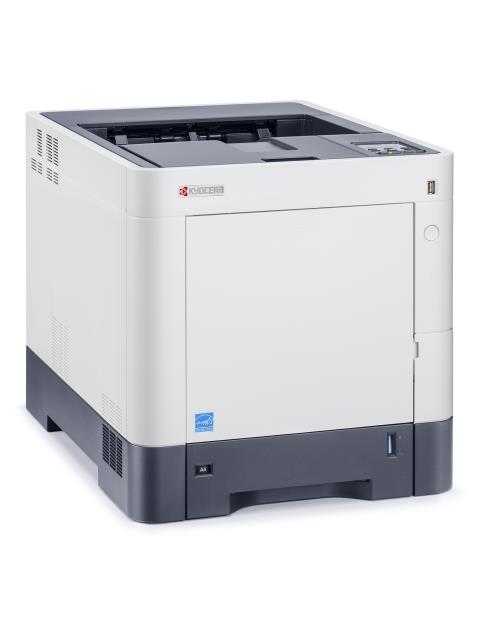
Kyocera Document Solutions America Introduces Two New Energy Efficient, Affordable ECOSYS Color Printers for Workgroups of Any Size

Kyocera Document Solutions America Introduces Two New Energy Efficient, Affordable ECOSYS Color Printers for Workgroups of Any Size

FAIRFIELD, N.J. – June 4, 2015– KYOCERA Document Solutions America, one of the world’s leading document solutions companies, today announced the launch of two new ECOSYS® color network printers, both of which pack an array of advanced features into a compact footprint. The ECOSYS P6035cdn and P6130cdn are designed for busy workgroups of all sizes; they come complete with standard duplex printing, enhanced paper capacity, and optional wireless printing capabilities. The Kyocera ECOSYS P6035cdn and ECOSYS P6130cdn output vivid color or black-and-white pages at a speedy 37 pages per minute (ppm) and 32 ppm respectively.
ECOSYS P6035cdn F Comb1As part of KYOCERA’s environmentally friendly ECOSYS line, both desktop color printers feature Kyocera’s patented long-life drum technology. The eco-friendly drum design, which separates the toner container, allows users to replenish toner without sacrificing the drum—thus reducing consumable costs and landfill waste. ECOSYS printers also conserve energy and associated costs by switching to standby mode when not in use.
Reliable, Productive, and User-Friendly
These ECOSYS printers are loaded with KYOCERA technology, ensuring that they’re as flexible as they are powerful. Notable specs include:
  • Output speed 37 ppm (ECOSYS P6035cdn), and 32 ppm (ECOSYS P6130cdn) in color and black & white;
  • Paper capacity up to 2,100 sheets (standard capacity 600 sheets);
  • Kyocera’s patented long-life consumable technology;
  • USB host interface for on-the-go printing;
  • Built-in Gigabit Ethernet for high-speed data processing;
  • Apple AirPrintTM capability for mobile printing from iOS devices.
Compact and Powerful
ECOSYS P6130cdn L Comb1_jpgThe Kyocera ECOSYS P6035cdn and ECOSYS P6130cdn can be optimized with a select group of business applications, including Kyocera Mobile Print, which frees users to print files from their smartphones or tablets; Apple AirPrint, which enables printing from iOS and OSX products without a driver; Command Center Rx, which tracks toner and paper consumption from a web browser; and PRESCRIBE, which allows users to create, store, and output frequently used forms directly from their printer.
Pricing and Availability
ECOSYS printers are available through authorized Kyocera dealers.

  • ECOSYS P6035cdn: $1,983 MSRP
  • ECOSYS P6130cdn: $1,569 MSRP
    To find the nearest dealer, please visit Kyocera’s dealer locator at:
###
ABOUT KYOCERA DOCUMENT SOLUTIONS AMERICA
KYOCERA Document Solutions America, Inc. (www.kyoceradocumentsolutions.com/la), headquartered in Fairfield, N.J., is a leading provider of computer-connectable document imaging and document management systems, including network-ready digital MFPs/printers, laser printers, color MFPs/printers, digital laser facsimiles, and multifunctional and wide format imaging solutions. KYOCERA Document Solutions America is a group company of KYOCERA Document Solutions Inc., a core company of the KYOCERA Corporation, the world’s leading developer and manufacturer of advanced ceramics and associated products, including telecommunications equipment, semiconductor packages and electronic components. KYOCERA Document Solutions America, the first document solutions company with third-party certified sales data, has earned numerous honors for its products’ high performance, reliability and cost efficiency. KYOCERA Corporation’s consolidated net revenues exceeded $14.1 billion for the fiscal year ending on March 31, 2014.