http://revision3.com/geekbeatreviews/first-look-at-new-hp-business-printers-for-2015/
Christine Dunne, Barbara Richards and Deborah Hawkins
Mar 10, 2015
Today, HP
announced the global launch
of a “re-engineered, sleek” new series of A4 color LaserJet printers
intended to make businesses more efficient. The devices—which consist of
one MFP and three single function printers—are a significant departure
from previous LaserJet products. Comprising new “JetIntelligence”
technology, they take up 40% less space; use up to 53% less energy; and
wake up, print, and duplex “in a fraction of the time.”
The “enterprise” M552 and M553 single function printers, for
instance, offer 100% duplex productivity—meaning that in addition to
printing 40 one-sided pages per minute they can achieve 40 images per
minute spread across two sides of the page. HP says the announcement
represents its most significant laser printing re-engineering since the
launch of the first LaserJet in 1984.
Footprint of New HP LaserJet Devices
 Source: HP press event in New York City
The devices are built around original HP toner cartridges with
JetIntelligence, delivering up to 33% percent more pages compared to
previous toner technology. This is achieved through a reduction in toner
waste as well as more space available for toner in the cartridge. The
cartridges also feature a lower fusing temperature as a result of
polymerized toner particles, “innovative” anti-fraud technology to
protect against counterfeits, and “print gauge technology” for better
predicting cartridge life.
From a mobility standpoint, the products offer a version of Wi-Fi
Direct Print that enables access to the Internet and printer at the same
time, while the M552 and M553 single function printers also offer
Google Cloud Print 2.0 supporting Google’s new local printing standard
for Chromebooks and Chrome OS applications. The devices
range in price from $299.99 to $1,199.99,
which is comparable to predecessor models, while HP says their
high-capacity toner cartridges have an 8 to 10% lower cost per page.
When unveiling these products to analysts, HP highlighted several
trends driving today’s changing office—including a focus on 1) energy
reduction and the environment, 2) collaboration and space design, 3)
your office being “where you are”, 4) security, and 5) automation of
paper-based processes.
HP LaserJet and Enterprise Solutions Senior Vice President Pradeep
Jotwani emphasized that office spaces have become more compact, yet
employees still need completely functional devices.
At the same time, they need to be able to work from wherever they are
(in office, at home, on the go, etc.)—which includes being able to
print “intuitively” from mobile devices. Jotwani also stressed that
business process automation has become increasingly important given its
benefits around cost, accuracy, productivity, and big data.
It appears that HP has taken several of these trends into account with the introduction of its new LaserJet series.
InfoTrends’ Opinion
The new models from HP are impressive; it is clear the company has
checked off the box of required features and functionality to stay
competitive. While HP is the definite leader in the laser printer
market, it is evident the company does not want to take this leadership
position for granted and is continuing to refine the technology to
fortify its core business. Furthermore, recent quarterly earnings
announcements have reinforced the importance of innovating within this
segment.
While these models seem to be closing the gap between laser and
business inkjet technology in a number of ways (e.g., from a footprint
and “green” standpoint), it appears that HP continues to view each
technology as excelling in certain areas. For example, in the area of
color printing, inkjet technology continues to be positioned for general
office settings while LaserJet technology is promoted for more
specialized environments.
It will be interesting to see how much success these products are
able to achieve in the market, particularly when considering the extent
to which traditional copier vendors as well as business inkjet vendors
(including HP) have infiltrated the A4 office space. Nevertheless, given
some of the particularities of these devices as well as the apparent
breadth of marketing planned for the launch, we would not be surprised
to see HP capture market share in this segment as well as move further
upstream with the new technology.
InfoTrends will soon be publishing a more detailed discussion of
these LaserJet devices for clients of its Digital Peripherals Solutions
and Digital Peripherals Solutions Europe consulting services. For more
information on this analysis piece, please
- See more at: http://blog.infotrends.com/?p=18338#sthash.inn13zFL.dpuf
Christine Dunne, Barbara Richards and Deborah Hawkins
Mar 10, 2015
Today, HP
announced the global launch
of a “re-engineered, sleek” new series of A4 color LaserJet printers
intended to make businesses more efficient. The devices—which consist of
one MFP and three single function printers—are a significant departure
from previous LaserJet products. Comprising new “JetIntelligence”
technology, they take up 40% less space; use up to 53% less energy; and
wake up, print, and duplex “in a fraction of the time.”
The “enterprise” M552 and M553 single function printers, for
instance, offer 100% duplex productivity—meaning that in addition to
printing 40 one-sided pages per minute they can achieve 40 images per
minute spread across two sides of the page. HP says the announcement
represents its most significant laser printing re-engineering since the
launch of the first LaserJet in 1984.
- See more at: http://blog.infotrends.com/?p=18338#sthash.inn13zFL.dpuf
Christine Dunne, Barbara Richards and Deborah Hawkins
Mar 10, 2015
Today, HP
announced the global launch
of a “re-engineered, sleek” new series of A4 color LaserJet printers
intended to make businesses more efficient. The devices—which consist of
one MFP and three single function printers—are a significant departure
from previous LaserJet products. Comprising new “JetIntelligence”
technology, they take up 40% less space; use up to 53% less energy; and
wake up, print, and duplex “in a fraction of the time.”
The “enterprise” M552 and M553 single function printers, for
instance, offer 100% duplex productivity—meaning that in addition to
printing 40 one-sided pages per minute they can achieve 40 images per
minute spread across two sides of the page. HP says the announcement
represents its most significant laser printing re-engineering since the
launch of the first LaserJet in 1984.
Footprint of New HP LaserJet Devices
Source: HP press event in New York City
The devices are built around original HP toner cartridges with
JetIntelligence, delivering up to 33% percent more pages compared to
previous toner technology. This is achieved through a reduction in toner
waste as well as more space available for toner in the cartridge. The
cartridges also feature a lower fusing temperature as a result of
polymerized toner particles, “innovative” anti-fraud technology to
protect against counterfeits, and “print gauge technology” for better
predicting cartridge life.
From a mobility standpoint, the products offer a version of Wi-Fi
Direct Print that enables access to the Internet and printer at the same
time, while the M552 and M553 single function printers also offer
Google Cloud Print 2.0 supporting Google’s new local printing standard
for Chromebooks and Chrome OS applications. The devices
range in price from $299.99 to $1,199.99,
which is comparable to predecessor models, while HP says their
high-capacity toner cartridges have an 8 to 10% lower cost per page.
When unveiling these products to analysts, HP highlighted several
trends driving today’s changing office—including a focus on 1) energy
reduction and the environment, 2) collaboration and space design, 3)
your office being “where you are”, 4) security, and 5) automation of
paper-based processes.
HP LaserJet and Enterprise Solutions Senior Vice President Pradeep
Jotwani emphasized that office spaces have become more compact, yet
employees still need completely functional devices.
At the same time, they need to be able to work from wherever they are
(in office, at home, on the go, etc.)—which includes being able to
print “intuitively” from mobile devices. Jotwani also stressed that
business process automation has become increasingly important given its
benefits around cost, accuracy, productivity, and big data.
It appears that HP has taken several of these trends into account with the introduction of its new LaserJet series.
InfoTrends’ Opinion
The new models from HP are impressive; it is clear the company has
checked off the box of required features and functionality to stay
competitive. While HP is the definite leader in the laser printer
market, it is evident the company does not want to take this leadership
position for granted and is continuing to refine the technology to
fortify its core business. Furthermore, recent quarterly earnings
announcements have reinforced the importance of innovating within this
segment.
While these models seem to be closing the gap between laser and
business inkjet technology in a number of ways (e.g., from a footprint
and “green” standpoint), it appears that HP continues to view each
technology as excelling in certain areas. For example, in the area of
color printing, inkjet technology continues to be positioned for general
office settings while LaserJet technology is promoted for more
specialized environments.
It will be interesting to see how much success these products are
able to achieve in the market, particularly when considering the extent
to which traditional copier vendors as well as business inkjet vendors
(including HP) have infiltrated the A4 office space. Nevertheless, given
some of the particularities of these devices as well as the apparent
breadth of marketing planned for the launch, we would not be surprised
to see HP capture market share in this segment as well as move further
upstream with the new technology.
InfoTrends will soon be publishing a more detailed discussion of
these LaserJet devices for clients of its Digital Peripherals Solutions
and Digital Peripherals Solutions Europe consulting services. For more
information on this analysis piece, please contact Scott Phinney at scott.phinney@infotrends.com.
0
2
4
 Receive a weekly summary of recent blogs and other exclusive content.
InfoTrends Resources
New InfoTrends Studies
Receive a weekly summary of recent blogs and other exclusive content.
InfoTrends Resources
New InfoTrends Studies
Tags:
Automation,
Cartridge,
counterfeit,
Design,
duplex,
energy,
Environment,
global,
HP,
JetIntelligence,
LaserJet,
launch,
MFP,
Mobile Printing,
polymerized,
Print,
security,
single function printers,
size,
Toner
 Hewlett-Packard
,
HP,
Laser,
Mobile Printing,
Office,
Print,
Product Release,
Supplies,
Toner |
More blogs from
Christine Dunne
- See more at: http://blog.infotrends.com/?p=18338#sthash.inn13zFL.dpuf
Christine Dunne, Barbara Richards and Deborah Hawkins
Mar 10, 2015
Today, HP
announced the global launch
of a “re-engineered, sleek” new series of A4 color LaserJet printers
intended to make businesses more efficient. The devices—which consist of
one MFP and three single function printers—are a significant departure
from previous LaserJet products. Comprising new “JetIntelligence”
technology, they take up 40% less space; use up to 53% less energy; and
wake up, print, and duplex “in a fraction of the time.”
The “enterprise” M552 and M553 single function printers, for
instance, offer 100% duplex productivity—meaning that in addition to
printing 40 one-sided pages per minute they can achieve 40 images per
minute spread across two sides of the page. HP says the announcement
represents its most significant laser printing re-engineering since the
launch of the first LaserJet in 1984.
Footprint of New HP LaserJet Devices
Source: HP press event in New York City
The devices are built around original HP toner cartridges with
JetIntelligence, delivering up to 33% percent more pages compared to
previous toner technology. This is achieved through a reduction in toner
waste as well as more space available for toner in the cartridge. The
cartridges also feature a lower fusing temperature as a result of
polymerized toner particles, “innovative” anti-fraud technology to
protect against counterfeits, and “print gauge technology” for better
predicting cartridge life.
From a mobility standpoint, the products offer a version of Wi-Fi
Direct Print that enables access to the Internet and printer at the same
time, while the M552 and M553 single function printers also offer
Google Cloud Print 2.0 supporting Google’s new local printing standard
for Chromebooks and Chrome OS applications. The devices
range in price from $299.99 to $1,199.99,
which is comparable to predecessor models, while HP says their
high-capacity toner cartridges have an 8 to 10% lower cost per page.
When unveiling these products to analysts, HP highlighted several
trends driving today’s changing office—including a focus on 1) energy
reduction and the environment, 2) collaboration and space design, 3)
your office being “where you are”, 4) security, and 5) automation of
paper-based processes.
HP LaserJet and Enterprise Solutions Senior Vice President Pradeep
Jotwani emphasized that office spaces have become more compact, yet
employees still need completely functional devices.
At the same time, they need to be able to work from wherever they are
(in office, at home, on the go, etc.)—which includes being able to
print “intuitively” from mobile devices. Jotwani also stressed that
business process automation has become increasingly important given its
benefits around cost, accuracy, productivity, and big data.
It appears that HP has taken several of these trends into account with the introduction of its new LaserJet series.
InfoTrends’ Opinion
The new models from HP are impressive; it is clear the company has
checked off the box of required features and functionality to stay
competitive. While HP is the definite leader in the laser printer
market, it is evident the company does not want to take this leadership
position for granted and is continuing to refine the technology to
fortify its core business. Furthermore, recent quarterly earnings
announcements have reinforced the importance of innovating within this
segment.
While these models seem to be closing the gap between laser and
business inkjet technology in a number of ways (e.g., from a footprint
and “green” standpoint), it appears that HP continues to view each
technology as excelling in certain areas. For example, in the area of
color printing, inkjet technology continues to be positioned for general
office settings while LaserJet technology is promoted for more
specialized environments.
It will be interesting to see how much success these products are
able to achieve in the market, particularly when considering the extent
to which traditional copier vendors as well as business inkjet vendors
(including HP) have infiltrated the A4 office space. Nevertheless, given
some of the particularities of these devices as well as the apparent
breadth of marketing planned for the launch, we would not be surprised
to see HP capture market share in this segment as well as move further
upstream with the new technology.
InfoTrends will soon be publishing a more detailed discussion of
these LaserJet devices for clients of its Digital Peripherals Solutions
and Digital Peripherals Solutions Europe consulting services. For more
information on this analysis piece, please contact Scott Phinney at scott.phinney@infotrends.com.
0
2
4
Receive a weekly summary of recent blogs and other exclusive content.
InfoTrends Resources
New InfoTrends Studies
Tags:
Automation,
Cartridge,
counterfeit,
Design,
duplex,
energy,
Environment,
global,
HP,
JetIntelligence,
LaserJet,
launch,
MFP,
Mobile Printing,
polymerized,
Print,
security,
single function printers,
size,
Toner
Hewlett-Packard,
HP,
Laser,
Mobile Printing,
Office,
Print,
Product Release,
Supplies,
Toner |
More blogs from
Christine Dunne
- See more at: http://blog.infotrends.com/?p=18338#sthash.inn13zFL.dpuf
Christine Dunne, Barbara Richards and Deborah Hawkins
Mar 10, 2015
Today, HP
announced the global launch
of a “re-engineered, sleek” new series of A4 color LaserJet printers
intended to make businesses more efficient. The devices—which consist of
one MFP and three single function printers—are a significant departure
from previous LaserJet products. Comprising new “JetIntelligence”
technology, they take up 40% less space; use up to 53% less energy; and
wake up, print, and duplex “in a fraction of the time.”
The “enterprise” M552 and M553 single function printers, for
instance, offer 100% duplex productivity—meaning that in addition to
printing 40 one-sided pages per minute they can achieve 40 images per
minute spread across two sides of the page. HP says the announcement
represents its most significant laser printing re-engineering since the
launch of the first LaserJet in 1984.
Footprint of New HP LaserJet Devices
Source: HP press event in New York City
The devices are built around original HP toner cartridges with
JetIntelligence, delivering up to 33% percent more pages compared to
previous toner technology. This is achieved through a reduction in toner
waste as well as more space available for toner in the cartridge. The
cartridges also feature a lower fusing temperature as a result of
polymerized toner particles, “innovative” anti-fraud technology to
protect against counterfeits, and “print gauge technology” for better
predicting cartridge life.
From a mobility standpoint, the products offer a version of Wi-Fi
Direct Print that enables access to the Internet and printer at the same
time, while the M552 and M553 single function printers also offer
Google Cloud Print 2.0 supporting Google’s new local printing standard
for Chromebooks and Chrome OS applications. The devices
range in price from $299.99 to $1,199.99,
which is comparable to predecessor models, while HP says their
high-capacity toner cartridges have an 8 to 10% lower cost per page.
When unveiling these products to analysts, HP highlighted several
trends driving today’s changing office—including a focus on 1) energy
reduction and the environment, 2) collaboration and space design, 3)
your office being “where you are”, 4) security, and 5) automation of
paper-based processes.
HP LaserJet and Enterprise Solutions Senior Vice President Pradeep
Jotwani emphasized that office spaces have become more compact, yet
employees still need completely functional devices.
At the same time, they need to be able to work from wherever they are
(in office, at home, on the go, etc.)—which includes being able to
print “intuitively” from mobile devices. Jotwani also stressed that
business process automation has become increasingly important given its
benefits around cost, accuracy, productivity, and big data.
It appears that HP has taken several of these trends into account with the introduction of its new LaserJet series.
InfoTrends’ Opinion
The new models from HP are impressive; it is clear the company has
checked off the box of required features and functionality to stay
competitive. While HP is the definite leader in the laser printer
market, it is evident the company does not want to take this leadership
position for granted and is continuing to refine the technology to
fortify its core business. Furthermore, recent quarterly earnings
announcements have reinforced the importance of innovating within this
segment.
While these models seem to be closing the gap between laser and
business inkjet technology in a number of ways (e.g., from a footprint
and “green” standpoint), it appears that HP continues to view each
technology as excelling in certain areas. For example, in the area of
color printing, inkjet technology continues to be positioned for general
office settings while LaserJet technology is promoted for more
specialized environments.
It will be interesting to see how much success these products are
able to achieve in the market, particularly when considering the extent
to which traditional copier vendors as well as business inkjet vendors
(including HP) have infiltrated the A4 office space. Nevertheless, given
some of the particularities of these devices as well as the apparent
breadth of marketing planned for the launch, we would not be surprised
to see HP capture market share in this segment as well as move further
upstream with the new technology.
InfoTrends will soon be publishing a more detailed discussion of
these LaserJet devices for clients of its Digital Peripherals Solutions
and Digital Peripherals Solutions Europe consulting services. For more
information on this analysis piece, please contact Scott Phinney at scott.phinney@infotrends.com.
- See more at: http://blog.infotrends.com/?p=18338#sthash.inn13zFL.dpuf
Christine Dunne, Barbara Richards and Deborah Hawkins
Mar 10, 2015
Today, HP
announced the global launch
of a “re-engineered, sleek” new series of A4 color LaserJet printers
intended to make businesses more efficient. The devices—which consist of
one MFP and three single function printers—are a significant departure
from previous LaserJet products. Comprising new “JetIntelligence”
technology, they take up 40% less space; use up to 53% less energy; and
wake up, print, and duplex “in a fraction of the time.”
The “enterprise” M552 and M553 single function printers, for
instance, offer 100% duplex productivity—meaning that in addition to
printing 40 one-sided pages per minute they can achieve 40 images per
minute spread across two sides of the page. HP says the announcement
represents its most significant laser printing re-engineering since the
launch of the first LaserJet in 1984.
Footprint of New HP LaserJet Devices
Source: HP press event in New York City
The devices are built around original HP toner cartridges with
JetIntelligence, delivering up to 33% percent more pages compared to
previous toner technology. This is achieved through a reduction in toner
waste as well as more space available for toner in the cartridge. The
cartridges also feature a lower fusing temperature as a result of
polymerized toner particles, “innovative” anti-fraud technology to
protect against counterfeits, and “print gauge technology” for better
predicting cartridge life.
From a mobility standpoint, the products offer a version of Wi-Fi
Direct Print that enables access to the Internet and printer at the same
time, while the M552 and M553 single function printers also offer
Google Cloud Print 2.0 supporting Google’s new local printing standard
for Chromebooks and Chrome OS applications. The devices
range in price from $299.99 to $1,199.99,
which is comparable to predecessor models, while HP says their
high-capacity toner cartridges have an 8 to 10% lower cost per page.
When unveiling these products to analysts, HP highlighted several
trends driving today’s changing office—including a focus on 1) energy
reduction and the environment, 2) collaboration and space design, 3)
your office being “where you are”, 4) security, and 5) automation of
paper-based processes.
HP LaserJet and Enterprise Solutions Senior Vice President Pradeep
Jotwani emphasized that office spaces have become more compact, yet
employees still need completely functional devices.
At the same time, they need to be able to work from wherever they are
(in office, at home, on the go, etc.)—which includes being able to
print “intuitively” from mobile devices. Jotwani also stressed that
business process automation has become increasingly important given its
benefits around cost, accuracy, productivity, and big data.
It appears that HP has taken several of these trends into account with the introduction of its new LaserJet series.
InfoTrends’ Opinion
The new models from HP are impressive; it is clear the company has
checked off the box of required features and functionality to stay
competitive. While HP is the definite leader in the laser printer
market, it is evident the company does not want to take this leadership
position for granted and is continuing to refine the technology to
fortify its core business. Furthermore, recent quarterly earnings
announcements have reinforced the importance of innovating within this
segment.
While these models seem to be closing the gap between laser and
business inkjet technology in a number of ways (e.g., from a footprint
and “green” standpoint), it appears that HP continues to view each
technology as excelling in certain areas. For example, in the area of
color printing, inkjet technology continues to be positioned for general
office settings while LaserJet technology is promoted for more
specialized environments.
It will be interesting to see how much success these products are
able to achieve in the market, particularly when considering the extent
to which traditional copier vendors as well as business inkjet vendors
(including HP) have infiltrated the A4 office space. Nevertheless, given
some of the particularities of these devices as well as the apparent
breadth of marketing planned for the launch, we would not be surprised
to see HP capture market share in this segment as well as move further
upstream with the new technology.
InfoTrends will soon be publishing a more detailed discussion of
these LaserJet devices for clients of its Digital Peripherals Solutions
and Digital Peripherals Solutions Europe consulting services. For more
information on this analysis piece, please contact Scott Phinney at scott.phinney@infotrends.com.
- See more at: http://blog.infotrends.com/?p=18338#sthash.inn13zFL.dpuf
Christine Dunne, Barbara Richards and Deborah Hawkins
Mar 10, 2015
Today, HP
announced the global launch
of a “re-engineered, sleek” new series of A4 color LaserJet printers
intended to make businesses more efficient. The devices—which consist of
one MFP and three single function printers—are a significant departure
from previous LaserJet products. Comprising new “JetIntelligence”
technology, they take up 40% less space; use up to 53% less energy; and
wake up, print, and duplex “in a fraction of the time.”
The “enterprise” M552 and M553 single function printers, for
instance, offer 100% duplex productivity—meaning that in addition to
printing 40 one-sided pages per minute they can achieve 40 images per
minute spread across two sides of the page. HP says the announcement
represents its most significant laser printing re-engineering since the
launch of the first LaserJet in 1984.
Footprint of New HP LaserJet Devices
Source: HP press event in New York City
The devices are built around original HP toner cartridges with
JetIntelligence, delivering up to 33% percent more pages compared to
previous toner technology. This is achieved through a reduction in toner
waste as well as more space available for toner in the cartridge. The
cartridges also feature a lower fusing temperature as a result of
polymerized toner particles, “innovative” anti-fraud technology to
protect against counterfeits, and “print gauge technology” for better
predicting cartridge life.
From a mobility standpoint, the products offer a version of Wi-Fi
Direct Print that enables access to the Internet and printer at the same
time, while the M552 and M553 single function printers also offer
Google Cloud Print 2.0 supporting Google’s new local printing standard
for Chromebooks and Chrome OS applications. The devices
range in price from $299.99 to $1,199.99,
which is comparable to predecessor models, while HP says their
high-capacity toner cartridges have an 8 to 10% lower cost per page.
When unveiling these products to analysts, HP highlighted several
trends driving today’s changing office—including a focus on 1) energy
reduction and the environment, 2) collaboration and space design, 3)
your office being “where you are”, 4) security, and 5) automation of
paper-based processes.
HP LaserJet and Enterprise Solutions Senior Vice President Pradeep
Jotwani emphasized that office spaces have become more compact, yet
employees still need completely functional devices.
At the same time, they need to be able to work from wherever they are
(in office, at home, on the go, etc.)—which includes being able to
print “intuitively” from mobile devices. Jotwani also stressed that
business process automation has become increasingly important given its
benefits around cost, accuracy, productivity, and big data.
It appears that HP has taken several of these trends into account with the introduction of its new LaserJet series.
InfoTrends’ Opinion
The new models from HP are impressive; it is clear the company has
checked off the box of required features and functionality to stay
competitive. While HP is the definite leader in the laser printer
market, it is evident the company does not want to take this leadership
position for granted and is continuing to refine the technology to
fortify its core business. Furthermore, recent quarterly earnings
announcements have reinforced the importance of innovating within this
segment.
While these models seem to be closing the gap between laser and
business inkjet technology in a number of ways (e.g., from a footprint
and “green” standpoint), it appears that HP continues to view each
technology as excelling in certain areas. For example, in the area of
color printing, inkjet technology continues to be positioned for general
office settings while LaserJet technology is promoted for more
specialized environments.
It will be interesting to see how much success these products are
able to achieve in the market, particularly when considering the extent
to which traditional copier vendors as well as business inkjet vendors
(including HP) have infiltrated the A4 office space. Nevertheless, given
some of the particularities of these devices as well as the apparent
breadth of marketing planned for the launch, we would not be surprised
to see HP capture market share in this segment as well as move further
upstream with the new technology.
InfoTrends will soon be publishing a more detailed discussion of
these LaserJet devices for clients of its Digital Peripherals Solutions
and Digital Peripherals Solutions Europe consulting services. For more
information on this analysis piece, please contact Scott Phinney at scott.phinney@infotrends.com.
- See more at: http://blog.infotrends.com/?p=18338#sthash.inn13zFL.dpuf


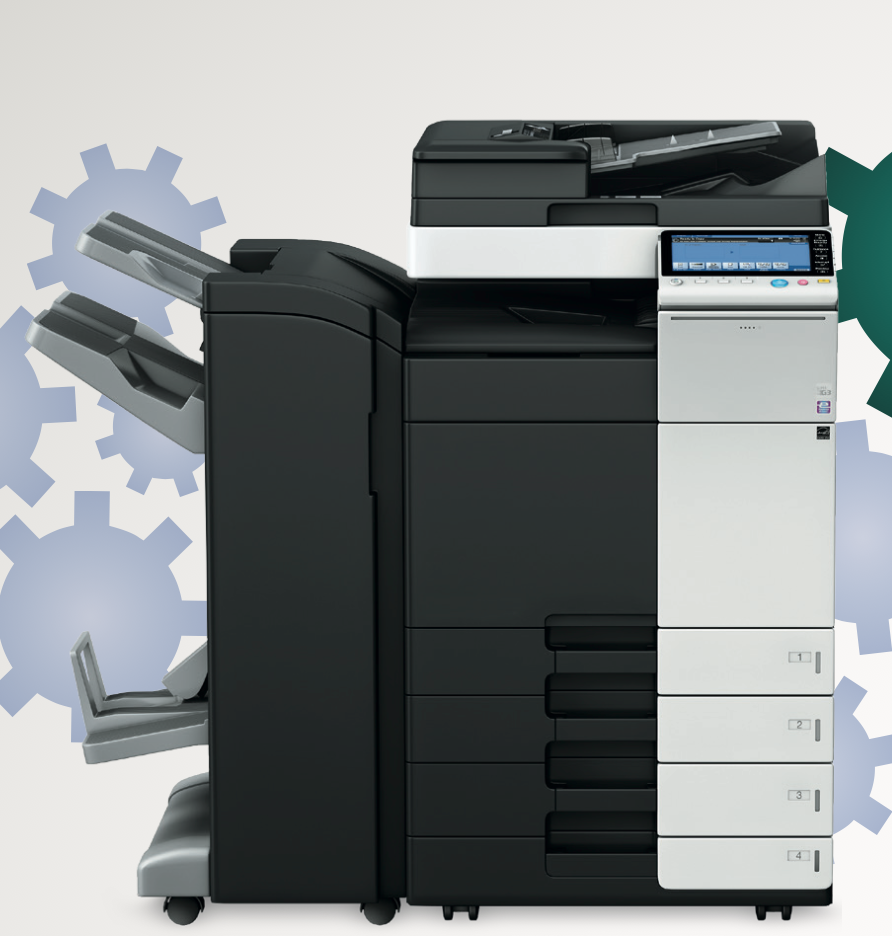
 In
addition to streamlining 11” x 17” printing, scanning, copying and
optional faxing, the new RICOH MP 4054/MP 5054/MP 6054 Series enables
easy document printing from mobile devices, cloud-based document
management, and promotes cost reduction through energy efficiency.
In
addition to streamlining 11” x 17” printing, scanning, copying and
optional faxing, the new RICOH MP 4054/MP 5054/MP 6054 Series enables
easy document printing from mobile devices, cloud-based document
management, and promotes cost reduction through energy efficiency. Photo courtesy of Anna Thorner.