Showing posts with label color laser printer. Show all posts

Friday, September 5, 2014

Samsung Brings Increased Productivity and Personalization with New ProXpress Printers and MFP’s

Samsung Brings Increased Productivity and Personalization with New ProXpress Printers and MFP’s

RIDGEFIELD PARK, NJ – September 2, 2014 – Samsung Electronics America, Inc. announced the C2620DWC2670FWM4583FX, and M4580FX, a new line of ProXpress single and multi-function printers (MFPs) designed for desktop use, but with the functionality to run an office. These powerful devices are built for small and medium-sized businesses and comfortable in the enterprise. Businesses can customize applications to meet a variety of needs with XOA while the M4583FX and M4580FX feature the new Samsung Smart User Interface (UI) powered by Android™, the first time MFPs have come equipped with an Android operating system.

“Samsung is dedicated to producing high quality, cost efficient printers to provide business users with an unparalleled printer experience,” said Matt Smith, Vice President of Sales and Marketing, Printing Solutions for Samsung’s Enterprise Business Division. “We understand the importance of seamless connectivity and simple user interfaces. Adopting the Android operating system into our printers makes them even simpler to operate and optimize.”
M4583FX and M4580FX: Powerful Performance and Intuitive Operability
The M4583FX and M4580FX are built for performance with fast scanning and powerful paper handling powered by a 1GHZ dual core CPU. Both models feature quick, reliable and economically efficient printing at speeds of up to 47 ppm. A Dual Scan Document Feeder (DSDF) allows for double-sided scanning at up to 60 images per minute. Further, a long life drum supporting up to 100,000 pages and high yield toner supporting up to 40,000 pages* are designed to perform longer, resulting in a lower total cost of ownership.
With the new Samsung Smart UI, along with an intuitive 10.1-inch LCD touchscreen display powered by Android, the MFPs can operate independently without a PC. Businesses can customize their printing experience with web search, quick print, and document preview functions. Both models also have an option to add wireless and active NFC capabilities, which provides users with the ability to effortlessly print files from an NFC-enabled smartphone using the Samsung Mobile Print App.
The M4583FX and M4580FX feature Samsung’s XOA-Embedded platform, allowing solutions developers and businesses to greatly enhance the functionality of these machines by building custom applications for a variety of business needs. From smarter workflows to enhanced security, custom XOA solutions can modernize an office and elevate businesses to new heights of efficiency.

C2620DW and C2670FW: Professional Color Quality and Ease of Use
Building on the successful line of CLP-680 series printers and CLX-6260 series MFPs, the C2620DW and C2670FW are enhanced for the modern office.Featuring Samsung’s Rendering Engine for Clean Page (ReCP) technology and polymerized toner, the printers deliver sharp vibrant prints at speeds up to 27 ppm for black & white and color.
The C2620DW and C2670FW are powered by a 4.1-inch LCD touchscreen display for intuitive and easy usage. Advanced mobility features, such as native Google Drive support and built-in NFC, allows users to print files from the cloud and from NFC-enabled smartphones via the Samsung Mobile Print App.
Screen Shot 2014-01-31 at 11.40.07 AMAdditionally, the devices include the XOA-Web platform, allowing business to integrate server-based smart solutions to enhance the feature set and improve productivity. The cost per page has been reduced from previous models, resulting in a lower TCO and better value to businesses.

Samsung Business Core Printing Solutions (BCPS)
BCPS is a software suite that runs on the XOA-Embedded platform and was created to improve workplace efficiency for small to medium-sized businesses. With custom workflows, secure print release, and cloud printing, IT managers can easily implement the kind of print and document management solutions typically seen in the enterprise. By installing BCPS on a M4580FX or M4583FX, businesses can connect up to five XOA-Web enabled machines, including the new C2620DW and C2670FW, which will save on costly infrastructure and servers.

Fully Mobile
All four new models are Google Cloud Print and Apple AirPrint compatible, providing a universal user experience no matter how users choose to print. In addition, the Samsung Mobile Print App facilitates printing and scanning from any Android or iOS powered mobile device with any Samsung network shared printer and MFP without the need for a computer. The app can be easily downloaded to a smartphone or tablet from popular app stores such as Google Play. With its capability to print Microsoft Office documents as well as support for Job Accounting and Secure print, businesses can improve the efficiency of their increasingly mobile workforce. 
All Samsung printers can be found at select Samsung resellers and channel partners. Local availability can be determined by calling 1-866-SAM-4BIZ or by visiting samsung.com/business. Follow us on Twitter @SamsungBizUSA.

About Samsung Electronics America Enterprise Business Division 
As a global leader in Information Technology, Samsung’s Enterprise Business Division (EBD) is committed to introducing new business experiences across a diverse spectrum of industries from retail to healthcare, hospitality to sales.  We believe technology brings business and customers together — to better share, collaborate and discover new opportunities. With a market-oriented approach to innovation, EBD is a division of Samsung Electronics America, Inc. (SEA), a U.S. subsidiary of Samsung Electronics Company, Ltd. (SEC). For more information, please visit samsung.com/business, call 1-866-SAM-4BIZ or follow Samsung EBD via Twitter: @SamsungBizUSA. 

About Samsung Electronics Co., Ltd.
Samsung Electronics Co., Ltd. is a global leader in technology, opening new possibilities for people everywhere. Through relentless innovation and discovery, we are transforming the worlds of TVs, smartphones, tablets, PCs, cameras, home appliances, printers, LTE systems, medical devices, semiconductors and LED solutions. We employ 286,000 people across 80 countries with annual sales of US$216.7 billion. To discover more, please visit www.samsung.com.
*ISO Disclaimer

Friday, June 13, 2014

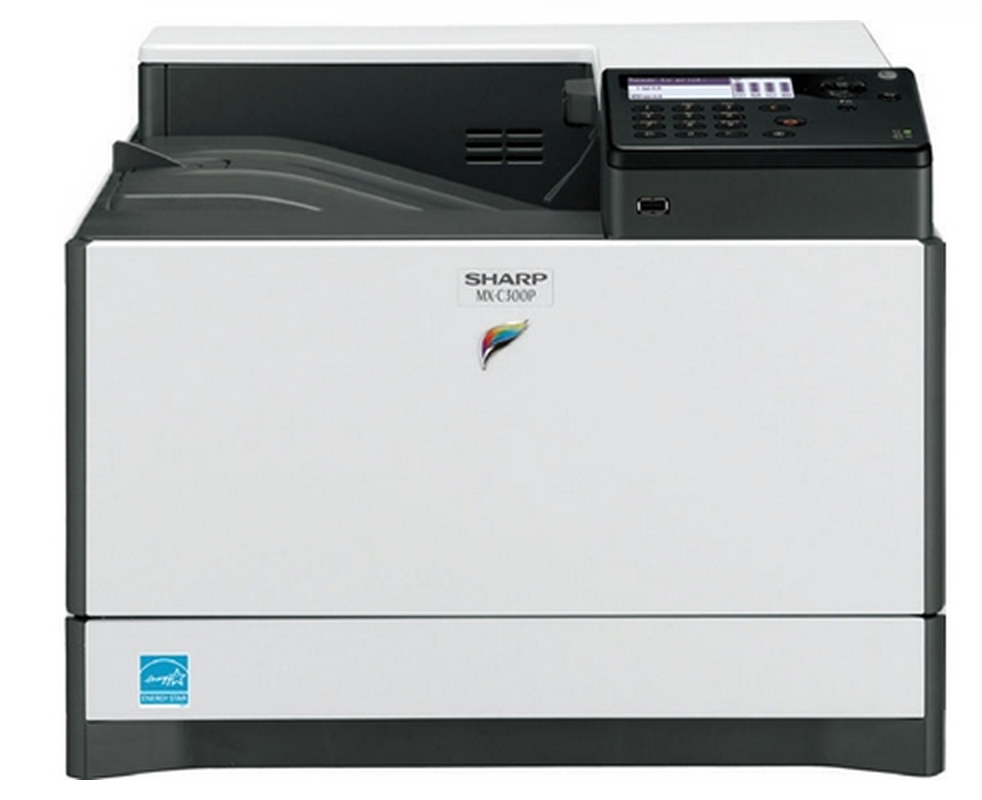
Sharp Expands A4 Product Line With New Color Desktop Printer

Sharp Expands A4 Product Line With New Color Desktop Printer

MAHWAH, N.J.June 11, 2014 /PRNewswire/ – Today, Sharp Imaging and Information Company of America (SIICA), a division of Sharp Electronics Corporation, introduced the MX-C300P color desktop printer, the latest model in its expanding line of compact desktop document systems. The new 30 page-per-minute color printer joins two compact desktop color MFPs announced in December, and offers advanced features that include both wireless and wired networking as well as direct USB printing. The device also offers convenient printing from popular mobile devices with Sharpdesk® mobile, a free downloadable app. The MX-C300P is built on Sharp’s newest compact color engine and is designed to fit into tight office spaces without compromising performance or reliability.
Screen Shot 2014-06-12 at 2.39.18 PM“The new MX-C300P is a powerful color desktop printer that is big on features and small on size,” said Mike Marusic, Senior Vice President, Marketing and Operations. “Sharp’s space-saving design enables this device to be placed in virtually any size office or workgroup, helping users to work more efficiently.”
The new MX-C300P color desktop printer is available immediately for purchase via authorized Dealers and direct sales.
About Sharp Electronics Corporation
Screen Shot 2014-04-21 at 1.01.36 PMSharp Electronics Corporation is the U.S. subsidiary of Japan’s Sharp Corporation, a worldwide developer of one-of-a-kind home entertainment products, appliances, networked multifunctional office solutions, solar energy solutions, LED lighting and mobile communication and information tools.

Wednesday, July 31, 2013

Samsung poised for ‘paradigm shift’ into printing

Samsung poised for ‘paradigm shift’ into printing


Conquering the world of smartphones and televisions would usually be enough for any one company, but Samsung Electronics has grander ambitions. The South Korean giant is readying a new, full-throttle foray into the exciting and sexy world of ... printers?

After announcing record quarterly profit on Friday morning of 9.5 trillion won (US$8.3 billion), a 47-per-cent jump from a year earlier, the move toward printers is unusual, to be sure, given the general sentiment about the business – that it’s dying.

Yet Samsung is aiming for $400 billion in annual revenue by 2020, or more than double its 2012 total of $187 billion. With market observers starting to doubt that the company can continue its momentum in phones, a key part of that projected growth will be expanding into previously untapped markets. That includes printers, or rather, "printing," as executives are keen to point out. There's a big difference.
"We're poised to lead a paradigm shift," says Hyusang Ha, vice-president of product strategy for printing solutions. "We feel the world of printing is changing."

Is printing dead?
Printing is indeed changing. On the consumer side it’s safe to say it’s drying up. Paper consumption has dropped off a cliff everywhere in the world, with the exception of China, since around 2007, which is – not coincidently – when the mobile revolution began in earnest. Since the arrival of the iPhone, consumers have finally been moving to the paperless existence promised by technology for so long. In North America alone, consumption has dropped by about 30 per cent over the past five years.
It’s easy to understand why. With smartphone and tablet apps dominating, people are finding fewer reasons to print out things like travel directions and boarding passes, especially with the exorbitant price of printer ink.

Samsung has fared decently in the consumer segment, claiming up to a quarter of the market, depending on the country. The company has about 5 per cent of the total global market, according to tracking firm IDC, after HP, Canon and Epson – three printing giants.
The problem, Ha says, is that the consumer segment accounts for just over a tenth of the total $200 billion market and, as the paper consumption numbers indicate, it’s flattening out. The enterprise side, on the other hand, is not only a much bigger market, it’s also growing at a healthy 7 per cent per year. That’s where Samsung wants to be.

The enterprise “printing” business is different than the consumer “printer” business because it’s about more than just hardware, Ha says. While consumers simply buy a printer and then refill it with ink every now and then, businesses require ongoing support, cloud hosting, set-up and maintenance, as well as continual supplies, all of which amount to regular revenue for the service provider.

NFC to be key
Pushing into the segment won’t be easy, since it’s currently ruled by established powerhouses such as Xerox and Ricoh. If Samsung has an edge, it may actually be its consumer electronics prowess.
The company is drawing on its mobile expertise by building near-field communications technology into the printers, the first of which will be available in North America in late July. The sensors will allow for a “tap to print” function, where the user will simply touch their phone or tablet to the printer in order to start a job, similar to how Galaxy S devices currently share photos.

Chin Yoon, vice-president of the commercial business group, says NFC is a technology that will soon be everywhere because it allows for quick, efficient and secure transmission of data. Putting it in printers will accelerate its uptake. “We expect that you cannot avoid it," he says.
Samsung also expects NFC will somewhat counter the trend toward paperlessness. Yoon points out that printing isn’t on the decline solely because people don’t want to do it, it’s just that they’re using mobile devices more and, so far, it hasn’t been very easy to print from them.

Ultimately, the company’s move into printing looks like someone driving a car in the wrong direction on a one-way street. While established giants such as HP and Epson are trying to lower their exposure to what conventional wisdom deems is a business in decline, Samsung is convinced there’s still gold in the printed page.

The problem that rivals are having, in Samsung’s view, is that they’re focusing on the wrong markets. Xerox and Ricoh are concentrating almost exclusively on Fortune 1000 companies, where there isn’t much growth, while HP and Canon are too tied to the shrinking consumer market. Small and medium-sized businesses is where Samsung sees the real opportunity. There is perhaps money to be made in those cracks, and as the established players look for opportunities elsewhere.

Staying the course with consumer printers, however, isn’t an option for anyone, Yoon says.
"We can only survive as a division if we're successful in B2B.”

Friday, April 26, 2013

Q1: Canon Reported 33.5% Net Income Decline


Canon announced its first quarter financial report on April 23rd. The company reported ¥816.7 billion (U.S. $8,688 million) net sales in the first quarter, 1.5% less compared with the same period last year. Operating expenses increased 7.4% year on year to ¥331.1 billion (U.S. $3,523 million) but operating profit decreased by 33.8% to ¥54.8 billion (U.S. $583 million). Net income decreased by 33.5% to ¥40.9 billion
Continuing weakness in the global economy, growing signs of a slowdown in China and Europe, and severe price competition are said to be the major reasons for its declines.

Sales for the Office Business Unit totaled ¥464.2 billion (U.S.$4,938 million), an increase of 6.0% year on year, while operating profit totaled ¥60.1 billion (U.S.$639 million) , an increase of 13.7%. The products in this unit include laser and multifunction devices (MFDs).

According to Canon, “Laser printers recorded a slight increase in sales volume year on year owing to sales expansion efforts centered on new products introduced last year offering exceptional environmental performance through such features as energy-saving functions and quiet operation.”

“Sales performance of color demand for multifunction devices (MFDs), led by the imageRUNNER ADVANCE C5200/C2200 series, increased from the year-ago period, total sales volume for both color and monochrome models decreased slightly due to deterioration in business confidence in the United States and Asia. Sales of the Océ VarioPrint 135 series, which was jointly developed by Canon and Océ for production printing, showed solid growth.”

Inkjet printers are classified in the Imaging System Business Unit, which reported ¥298.1 billion (U.S.$3,171  million) sales, declined by 1.8% and ¥28.5 billion (U.S.$303 million) operating profit, a decrease of 39.1%. In the first quarter, new inkjet printers featuring improved designs and operability in addition to enhanced print quality and other basic functionality were recognized by the market. Hence, a significant increase in sales volume from the year-ago period was reported.

Canon expects the global economy to realize a moderate recovery in the latter half of the year. In the 2nd quarter, demand for MFDs is projected to grow moderately mainly for color models fueled by the recovery of the global economy, while demand in the laser printer market is expected to realize a slight increase from last year. As for inkjet printers, with the growth in emerging markets offsetting the decline in developed countries, demand overall is expected to remain around the same level as for the previous year.
 

Friday, December 14, 2012

Does H-P need an investor like Icahn?

SAN FRANCISCO (MarketWatch) — As unconfirmed rumors swirled on Monday that investor Carl Icahn was buying up shares of Hewlett-Packard Co., its shares rallied, mostly on the prevailing theory that any activism at this point would be good to put pressure the embattled tech giant. 

But it’s still worth asking if indeed Icahn would even be interested in amassing enough of H-P’s HPQ +1.72%   stock to get any kind of a voice or seat on the board. If he did, would he help or hinder Chief Executive Meg Whitman’s effort at a turnaround? Read about H-P and Icahn rumors.
There are divergent views on this hypothetical question. It boils down to what should be done to turn around the fallen tech behemoth. If you are in the camp that believes that H-P’s parts are worth more separately than as a whole company, the presence of someone like Icahn, who was instrumental in the eventual spin-off at Motorola, now part of Google Inc., GOOG -0.10% , could be just the thing investors need.

Reuters
Would Carl Icahn, or an investor like him, be a good thing for H-P?
Icahn’s office did not return a call seeking comment and H-P declined to comment to a MarketWatch reporter.
UBS analyst Steve Milunovich has been advocating that H-P needs to break itself up, and predicted in early October that such a possibility will be prompted by activists or private-equity investors. 

“In our view, full value won’t be realized by just improving operations — structural change is required,” Milunovich wrote in a note. “H-P with its fully developed enterprise and consumer businesses should split up in order to realize greater value.” Read The Tell about Milunovich’s view.
H-P, though, has not embraced this point of view. Whitman appears to be trying to focus on getting the company’s various operations in order, at the same time that the personal computer business is getting hit by the growth in tablets and smartphones. Under the very brief tenure of former CEO Leo Apotheker, H-P looked at possibly spinning out or selling its PC business. He also killed Palm, which H-P purchased to get a foothold in tablets and smartphones. Apotheker wanted to grow software instead. Under Whitman, H-P decided to keep its PC business in tact. 

An outside investor like Icahn — or someone else — could argue that the corporate business, which includes services, servers, and software, does not need to be attached to PCs and printers. Other have argued, however, that the company gets more purchasing power when buying for all the hardware businesses at once. 

Some have also used IBM Corp.’s IBM -0.12%  turnaround, which mostly kept the tech giant together, as an example that H-P should follow. Milunovich argued that IBM is the wrong model in H-P’s case. Because H-P has fully developed consumer and printer businesses, it should be split apart. It’s also worth noting that if IBM is the model some would like to mirror, IBM sold its PC business to Lenovo of China in 2004. And before Lou Gerstner started the turnaround of IBM as its first outsider CEO, the company had already spun out its printer business, which is now Lexmark International Inc. LXK -1.32%
 
The other issue, however, is that H-P already has an activist investor on its board, albeit a silenced one. Ralph Whitworth of Relational Investors LLC, joined H-P’s board in November 2011, after he had accumulated over 17 million shares of the company. As part of the deal, Whitworth agreed not to publicly seek H-P’s sale or merger or spin off any of its assets.

Would another activist investor like Icahn want to get involved with a company that already has one activist on its board? 

Eric Jackson, founder of Ironfire Capital, said H-P is a tough situation for any activist investor.
“It would be tough for anyone right now,” Jackson said in an e-mail. “There are no silver bullets.” He also added that he did not think that “the styles of Icahn and Whitworth mesh well either.”
If Icahn is actually buying up H-P shares, investors will learn soon enough. But whether he or any other daring activist, could be an agent of major change, as some would hope, is a bigger question.
 
Therese Poletti is a senior columnist for MarketWatch in San Francisco.

Tuesday, December 6, 2011

Printer Reliability and Satisfaction: Brother, Canon, and Epson Lead the Field

Printer Reliability and Satisfaction: Brother, Canon, and Epson Lead the Field


No one printer maker stood out in our survey of readers about their experiences with printer reliability and their satisfaction with features.


Our survey results show up-and-down results for many printer makers. Samsung received high marks for its printers’ reliability and copy speed, but poor ones for photo and graphics printing quality. Participating readers esteemed Xerox for its machines’ printing speed and network connectivity, but bashed it for their poor reliability. Only Canon, Brother, and Epson had especially strong showings in both reliability and feature satisfaction; and of those three, only Canon also graded high in service and support.
Highlighted in the three charts below are our survey participants' ratings of desktop PC manufacturers in three general areas: reliability, features, and service/support. These results are drawn from our 2011 Reliability and Service survey of some 63,000 PCWorld readers. The other product categories covered in this survey were desktop PCs, laptop PCs, tablets, digital cameras, HDTVs, and smartphones. For a closer look at the methodology we used in our survey to gauge manufacturer reliability and customer satisfaction, see "Reliability and Satisfaction: What the Measures Mean."

Notes and Quotes

The printers section of our Reliability and Service survey prompted some vivid comments from participants, and we spotted a couple of significant details in the data, too:
• In the category as a whole, 14.2 percent of printer owner said that they had run into a significant problem with their machine in the past year. That percentage jumped to 27.6 percent when we counted only Lexmark printer owners.
• Overall, 6.3 percent of printer owners said that that their printer had developed a problem in the past year that was serious enough top prevent it from working.
• "I've used Brother printers for over 15 years at my office. They are workhorses and last a long time. I very rarely have any problems with them." --Brother printer owner
• "Reduce the noise. When it prints, it sounds like a dinosaur eating a helicopter in my room." --HP printer owner